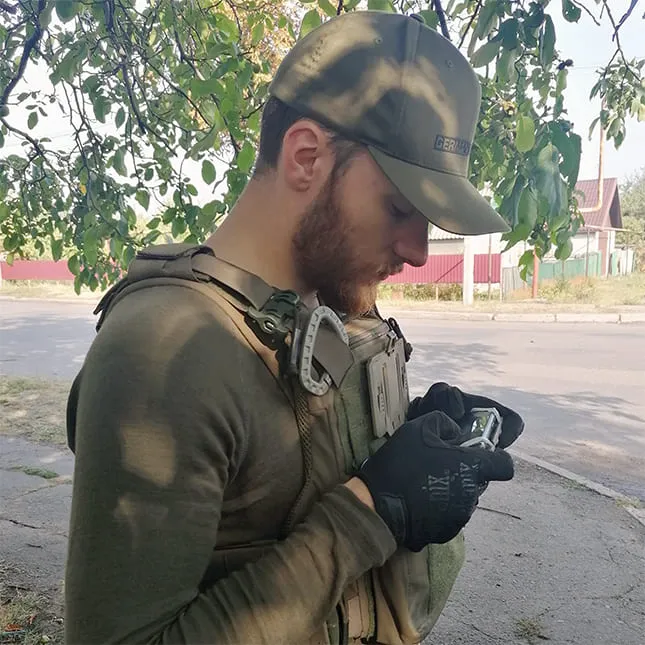

In a world where information often makes the decisive difference between success and failure, the U.S. military is striving for information dominance. A key instrument in this pursuit is the Tactical Assault Kit (TAK), a powerful platform for tactical communication and situational awareness. In this article, we take a detailed look at the future vision of TAK, based on the insightful presentation “2023 TAK Offsite TPC Main Brief – The Road to Information Dominance.”
The TAK Product Center: Innovation Engine for Military Communication
At the heart of TAK development is the TAK Product Center (TPC), led by Director Ryan McLean. Unlike traditional Department of Defense divisions, the TPC operates like an agile software company. It is characterized by flat hierarchies and prioritizes the continuous improvement and delivery of software.
McLean presented to an impressive audience that included representatives from all six branches of the U.S. Armed Forces. This broad participation underscores the growing importance of TAK within the U.S. military and the goal of creating a unified platform for information acquisition — particularly critical for future operations in the Pacific theater.
The Diverse Responsibilities of the TPC
The TPC sees itself as the central point of contact within the U.S. government for everything related to TAK. Its primary responsibilities include the innovation and development of new TAK features, the maintenance and support of existing systems, and the release and deployment of new TAK versions. Additionally, the TPC focuses on managing TAK’s core components, such as the TAK Kernel and the communication layer.
Another important task of the TPC is promoting plugins and extensions. The Center provides resources and tools for external partners to advance development. At the same time, the TPC ensures the interoperability of all TAK components and compliance with standards. Through close collaboration with users, the team continuously works to improve usability, ensuring that TAK meets the ever-evolving requirements of the modern military.
Cost, Price, and Value of TAK
An important point that McLean clarified in his presentation is the distinction between price, cost, and value of TAK. For end users, TAK is free to download and use. Nevertheless, development, maintenance, support, and deployment incur significant costs, which are borne by various stakeholders such as the U.S. Department of Defense and integrators.
The true value of TAK, however, lies in improved networking and information sharing. This value grows exponentially with the number of users, similar to what Metcalfe’s Law describes for networks. The TPC is continuously working to reduce the deployment costs of TAK while simultaneously increasing its value for users. This is to be achieved through shorter development cycles, improved software quality, and enhanced collaboration within the TAK community.

The Critical Role of Open Source for TAK
McLean emphasized the critical role of the open-source model for TAK’s success. By making the source code publicly available, developers worldwide can contribute to improving the system, which fosters innovation and enables faster development than proprietary software. Furthermore, the open-source model simplifies collaboration with industry, as companies can familiarize themselves with the source code and develop tailored solutions. This significantly shortens the experimentation phase for government-provided technologies and accelerates the testing and implementation of new features.
Challenges and Future Perspectives
Despite previous successes, McLean identified several areas where improvements are necessary. A central challenge is optimized data utilization. Data gathered from TAK should be better analyzed in the future to gain insights into usage patterns and further improve the software.
Another important aspect is the implementation of Zero Trust. Current security mechanisms do not yet fully meet the requirements of this model. McLean outlined plans to introduce more robust identity management features to further enhance TAK’s security.
With a growing user base, the question of scalability also arises. It must be ensured that TAK remains user-friendly and performant even as more and more users adopt the system. At the same time, it is a challenge to provide a similar feature set across all TAK products to enable seamless collaboration between different units and departments.
The TAK 2030 Strategy: The Road Ahead
To overcome these challenges and solidify TAK’s position as the leading platform for information dominance, the TPC has developed the TAK 2030 Strategy. This strategy is built on four pillars:
- Empowerment of TAK Users
- Continuous Improvement
- Effortless Integration and Security
- Universal Availability
Through the empowerment of TAK users, optimal tools and resources are to be provided to unlock the full potential of the system. Continuous improvement aims to constantly evolve TAK and adapt it to changing user needs.
Effortless integration and security is intended to simplify the incorporation of TAK into existing systems while simultaneously enhancing the platform’s security. Finally, universal availability aims to ensure that TAK is accessible to all relevant stakeholders, regardless of location or organization.
The Human Factor: Key to Success
Particularly noteworthy was McLean’s reference to Hyman Rickover, the father of the U.S. nuclear submarine fleet. He drew parallels between Rickover’s leadership style and the TPC’s approach, highlighting the importance of the human factor for the success of technological innovations.
Like Rickover, McLean emphasizes the importance of a strong engineering culture within the TPC and the broader TAK community. He sees fostering responsibility and creativity as critical to the continuous improvement and success of TAK. This parallel demonstrates that TAK’s success depends not only on technological innovations but also on the ability to create an environment where people take responsibility, are creative, and collaborate effectively.
Conclusion: TAK as a Trailblazer for Military & Civilian Information Dominance
The presentation at TAK Offsite 2023 provided fascinating insights into the future vision of TAK and the TPC’s strategies for achieving that vision. By prioritizing open source, data-driven software development, continuous improvement, and the cultivation of an innovative organizational culture, the TPC is well-positioned to solidify TAK’s role as the leading platform for information dominance for the U.S. Armed Forces and their allies.
The evolution of TAK impressively demonstrates how modern technology is revolutionizing tactical communication and situational awareness in the military context. It will be exciting to observe how TAK continues to evolve in the coming years and what innovations it will bring forth on the road to complete information dominance.
Would you like to learn more about how TAK can be deployed in civilian sectors? TAK Hub offers tailored solutions and training for deploying TAK across various sectors. From implementing complex server systems to comprehensive training programs — we support you in unlocking the full potential of TAK for your organization. Contact us for a personalized consultation and discover how TAK can revolutionize your operations.